
Chimney Inspection in Scarsdale, NY
A chimney inspection is a systematic examination of your chimney’s structure, liner, and connected appliances to confirm they’re safe to use and free of hidden damage. It matters because a chimney can look perfectly fine from the outside while harboring a cracked flue liner, a bird’s nest blocking airflow, or creosote buildup thick enough to ignite. In Scarsdale, where many homes date to the 1920s through the 1960s and were built with clay-tile flue liners that degrade over decades, a missed defect can turn a routine fire into a house fire.
We see it every season: a homeowner on Overlook Road or along Crane Road lights the first fire of October and notices smoke backing into the living room. Nine times out of ten, an annual inspection would have caught the cause months earlier.
Who Actually Needs a Chimney Inspection
The short answer is anyone who uses a fireplace, wood stove, gas insert, or oil-fired appliance vented through a masonry or factory-built chimney. The National Fire Protection Association (NFPA 211) recommends inspection at least once a year, regardless of how often you burn. That schedule exists because even a chimney that sits unused for a season can develop animal obstructions, mortar joint deterioration from freeze-thaw cycles, or moisture damage that goes unnoticed until it causes real problems.
Scarsdale’s winters are cold enough to drive hard freeze-thaw cycles through exposed masonry. A chimney that passed inspection three years ago may look the same today but have new spalling bricks or a shifted crown after a few rough winters. Buying or selling a home in the area is another clear trigger: mortgage lenders and home inspectors increasingly flag chimneys for a dedicated NFPA-level inspection before closing.
The Three Levels of Inspection and What each One Covers
NFPA 211 defines three levels. Understanding which one applies to your situation keeps you from paying for more than you need or, worse, stopping short of what’s actually necessary.
- Level 1 is appropriate if nothing about your system or how you use it has changed. The technician visually examines every accessible portion of the exterior and interior, checking the firebox, damper, smoke chamber, and visible flue for obstructions, deposits, and structural soundness. No specialized equipment required.
- Level 2 is required any time you change fuel types, install a new appliance, have experienced a chimney fire (even a small one), or are buying or selling the property. This level adds inspection of accessible attic, crawl space, and basement areas where the chimney passes through, and it includes a video scan of the entire flue interior.
- Level 3 applies when Levels 1 or 2 uncover a suspected hazard that cannot be confirmed without removing part of the structure. This is uncommon, but when it’s warranted, it’s warranted.
We’ll tell you clearly which level fits your situation before we start, and we won’t recommend Level 2 when Level 1 is genuinely sufficient.
What our Inspection Process looks like from Start to Finish
We arrive at the scheduled time. Before going anywhere near the fireplace, the technician walks the exterior of the home to look at the chimney cap, crown, flashing at the roofline, and the condition of the masonry joints. Loose or open mortar joints at the crown are one of the most common findings on older Scarsdale homes, and spotting them from the ground sets the stage for what to look for inside.
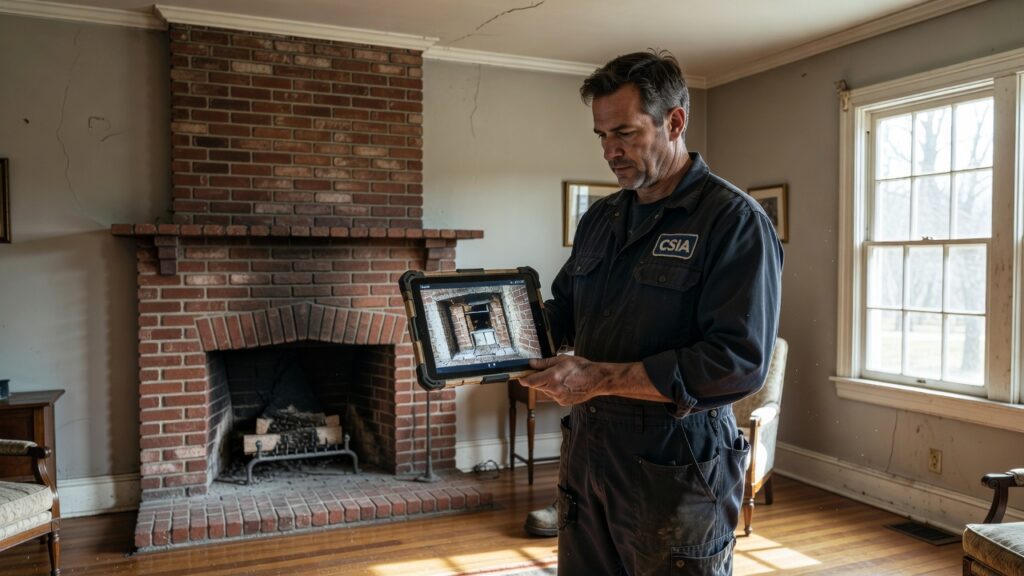
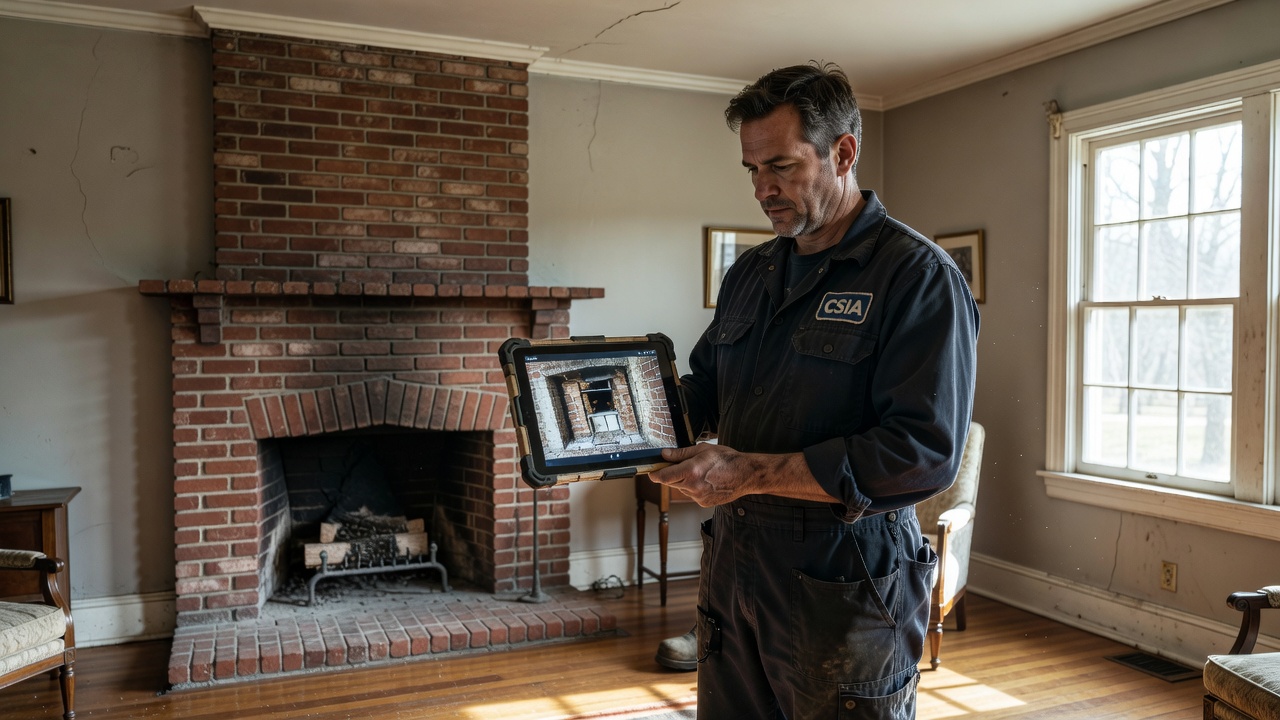
Inside, we examine the firebox floor and walls for cracks or spalling firebrick, check the damper for proper operation and fit, and look into the smoke chamber for deteriorated parging or excessive creosote. On a Level 2 inspection, we run a camera through the flue from top to bottom. The video feed is recorded so we can review it with you directly and show you exactly what we found, not just describe it.
At the end of the visit, you get a written report. It documents the condition of each component, notes anything that needs repair, and classifies defects by severity. You’ll know what’s a safety issue requiring immediate attention versus what’s a maintenance item to watch over the next season.
What’s included in the written report
- Condition rating for the chimney cap and crown
- Flashing integrity and any visible moisture intrusion points
- Exterior masonry condition, including mortar joints and brick face
- Damper operation and seal
- Firebox walls, floor, and lintel condition
- Smoke chamber and smoke shelf assessment
- Flue liner condition (with video documentation on Level 2)
- Creosote or debris accumulation level
- Any obstruction found (animal nests, fallen debris)
- Recommended next steps, clearly prioritized
Why Scarsdale homeowners work with us
We’re a local company. Our technicians know the housing stock in this part of Westchester County: the older colonials off Popham Road, the Tudor-style homes in Fox Meadow, the mid-century ranches near the Heathcote section. We see the same recurring issues in these homes because we’ve worked on them for years. That familiarity matters when we’re looking at a chimney that was last serviced by someone else a decade ago and we need to identify what’s original construction versus a past repair.
We hold current Chimney Safety Institute of America (CSIA) certification, which requires ongoing training and adherence to industry standards. We carry full liability insurance. We don’t subcontract inspection work to people we haven’t trained ourselves.
If an inspection reveals needed repairs, we can handle them. If it reveals nothing beyond routine sweeping, we’ll tell you that too and book the sweep on the spot if you want it done the same day.
Frequently Asked Questions about Chimney Inspection in Scarsdale
How long does a chimney inspection take for a typical Scarsdale home?
A Level 1 inspection on a single fireplace usually takes 45 minutes to an hour. A Level 2 inspection with a video scan of the flue runs closer to 90 minutes, especially on older homes where the chimney serves multiple flues or where there’s a separate boiler flue to examine. If you have two fireplaces, budget a little more time.
We just had a gas insert installed. Do we still need an inspection?
Yes, and specifically a Level 2. Changing from a wood-burning appliance to a gas insert is exactly the scenario NFPA 211 lists as requiring the more thorough examination. Gas appliances vent differently than wood fires and produce different byproducts. The existing clay-tile liner that was fine for wood may not be the right size or material for the new insert. The inspection confirms whether a liner relining or sizing adjustment is needed before you start using the new equipment.
Can you inspect a chimney that hasn’t been used in several years?
Absolutely, and it’s a good idea before you start using it again. Unused chimneys in Westchester County often have animal obstructions, particularly from birds and squirrels that find the flue a convenient nesting spot once the cap deteriorates. Masonry can also shift or crack from freeze-thaw action even when no fire has been lit. We’ll give you a clear picture of what you’re working with before you build the first fire.
Schedule Your Chimney Inspection in Scarsdale
If your chimney hasn’t been inspected in the past 12 months, or if you’re buying or selling a home in the area, call Chimney Experts to schedule. We serve Scarsdale and the surrounding Westchester communities, and we can usually get out to you within a few days. Appointments fill up quickly in September and October, so earlier in the season is easier for everyone.
Call us at (914) 999-0555 or use our online booking form to pick a time that works. We’ll confirm within one business day.
Related from Chimney Experts in Scarsdale: Chimney Sweep in Scarsdale, NY · Chimney Inspection in Hartsdale, NY · Chimney Repair Greenburgh NY